| Task | Record | Question to resolve |
|---|---|---|
| Return damp gear | Item, container and chosen drying routine | Where does moisture go? |
| Collect dry supplies | Shelf depth and retrieval position | Can supplies be reached with gear returned? |
| Store a bulky float | Inflated or folded dimensions | Does its container occupy the route? |
| Seasonal reset | Items retained and care instructions | Can the building still be inspected? |
Make an inventory for one ordinary swim
List the things carried out and brought back during a normal session: towels, goggles, fins, small toys and any seating accessories. Add the number of people collecting things at once. A layout for one person does not answer how a group queues or passes inside.
Measure floats in the state you actually intend to store them. An inflated float, a folded cover and a basket of loose toys occupy different shapes. Record daily items separately from the bulky seasonal items you rarely retrieve; do not let the occasional pile become the daily route.
Put the return task near the entrance
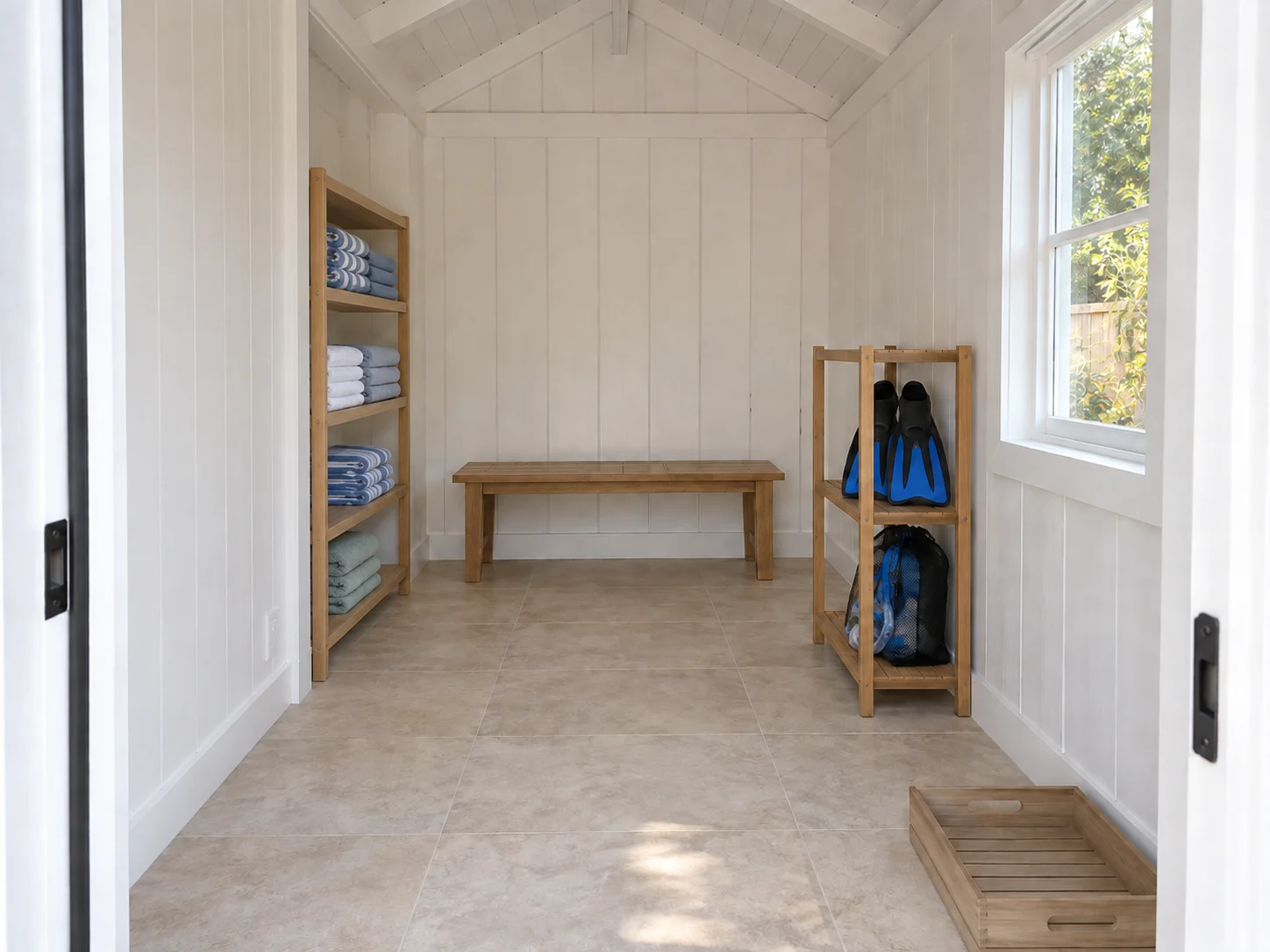
The 8×10 pool-gear study places a selected 24×28 in return allocation at the front right. Towels occupy a rear-left shelf, a small bench sits at the back and portable gear has a right-hand rack. The arrangement keeps a selected central approach clear while giving each task a location.
These are independently authored planning dimensions, not product specifications. The finish image shows a small timber tray as an appearance idea. That tray is not a specified drain or containment system. Decide how actual wet belongings are handled, dried and cleaned according to their care instructions before selecting the storage products.
Separate tasks, then check the environment
A dry-supplies zone describes the intended task; it does not establish dry conditions. Observe the room after use and after rain. Record where moisture appears, whether belongings were put away damp and whether the pattern changes when the routine changes. Bring those observations to the building or ventilation supplier.
Keep this brief specific to towels and portable gear. Pool chemicals and installed pump equipment require their own storage and equipment review. CDC provides separate pool-chemical guidance covering dedicated storage and manufacturer conditions; its aquatic-facility guidance does not turn this household gear layout into a chemical store. Plumbing, changing facilities and pool-house occupancy also need a separate proposal.
Try the awkward item before adding more storage
In the reference, adding one 20×40 in float basket at the selected location consumes 14×40 in of the central approach: 560 square inches. The basket fits inside the room, yet interferes with the route the baseline was designed to preserve. This is a useful question to ask of any attractive storage photograph.
Test the complete sequence with your own measured items: arrive, set down gear, collect supplies, use the bench if needed and leave. Include the door in operation and the outside approach. If a large item must move every time, record that step rather than assuming the floor is always arranged as it appears in a picture.
Leave room for a seasonal reset
At the end of the season, compare what was actually used with the original inventory. Give folded covers and occasional equipment a recorded location that still leaves inspection and cleaning possible. Check the relevant manufacturers’ storage instructions; one routine will not suit every fabric, inflatable or accessory.
Use the downloadable five-page study as a discussion reference. Alongside it, keep your actual item list, door and usable-room measurements, chosen wet-return method and unresolved environment questions. That combination is more useful for choosing a shed than matching its exterior to a styled image alone.
Keep these questions with your project.
0 of 6 reviewed · selections stay on this page
Continue from here
Sources & scope
These references support the questions above. For product-specific work, use the selected manufacturer’s current instructions.
Original planning assumptions, approach reservations and the added-basket counterexample.
Checked October 8, 2026. Separate chemical-storage guidance, including manufacturer conditions. Aquatic-facility provisions are not a residential shed specification.
Editorial policy and corrections · Our source and calculation method